Control Reversal
Transfers control of the conversation to the model, so it leads before committing to a response.
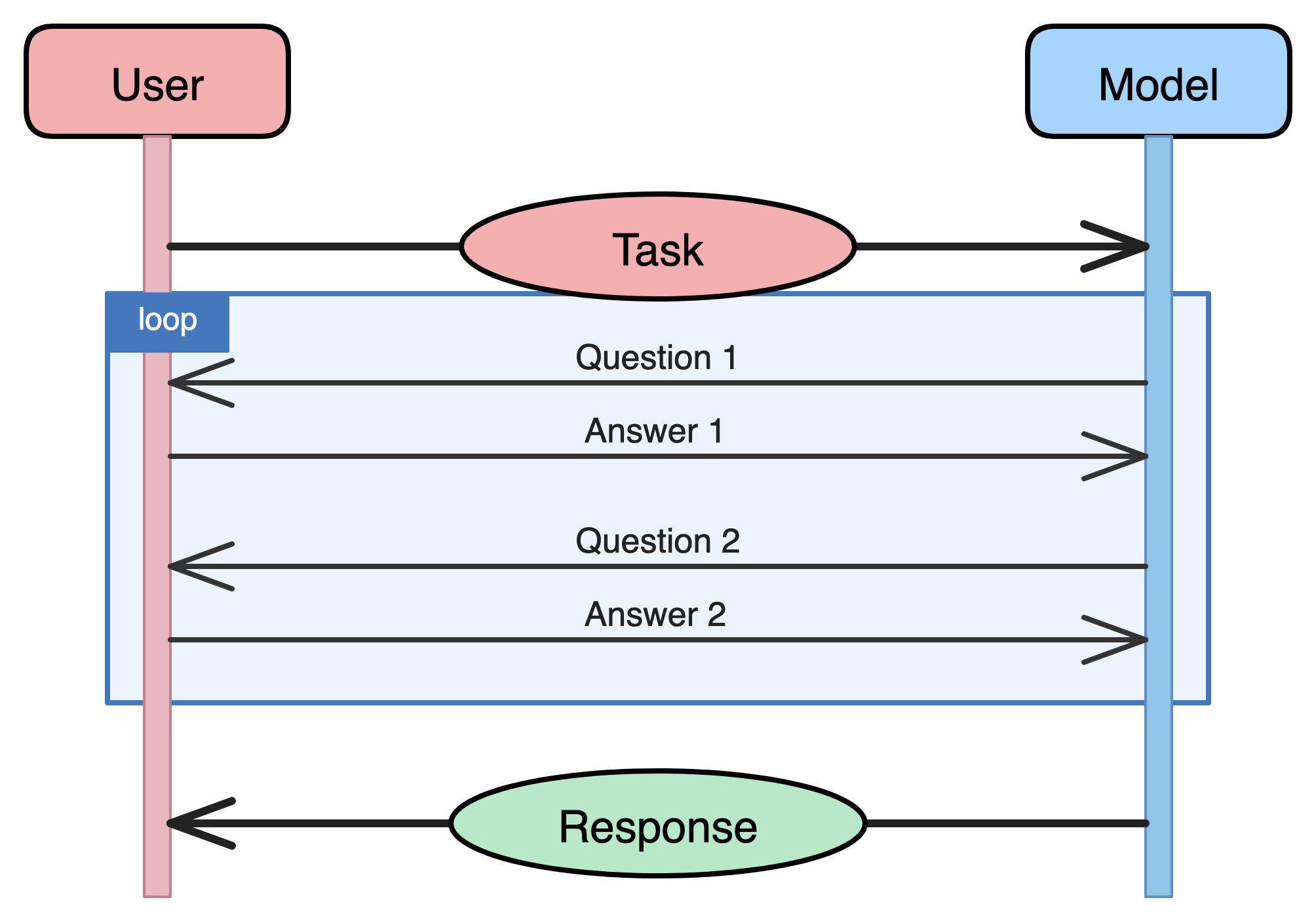
Problem
When requests are underspecified, the model answers anyway by filling unknowns with assumptions, often steering decisions off-target.
Solution
Transfer control to the model so it leads the conversation - asking questions, gathering context, guiding the user - before committing to a response. The model drives, the user responds.
Example
One worked example. The book has 2–4 per technique.
I need to choose a database for a new service. Instead of recommending one immediately, ask me questions one at a time until you have enough information to make a well-grounded recommendation. When you are ready, state your recommendation with reasoning.
Before I recommend anything, I need to understand the workload. First question:

What type of data will this service primarily store? For example: relational records with joins and transactions, documents or JSON blobs, time-series metrics, graph relationships, or key-value lookups?
Techniques
Concrete ways to implement Control Reversal. Each technique fits a different situation.
- 01
Progressive Discovery
Let the model ask questions iteratively, deciding what to ask next based on previous answers when categories of missing information are not known in advance.
- 02
Structured Elicitation
Define a framework of information categories the model must gather in turn before proceeding, suited to well-known task types with predictable needs.

Full treatment in the book
Control Reversal — the complete chapter
- ▸ Mechanism — why this pattern works
- ▸ 2–4 worked examples per technique
- ▸ Placement, sequencing, and debugging rules
- ▸ Composition with related patterns