Prompting Principles
Prompting principles are the core design principles of effective prompting. They define how to specify intent, provide context, guide the model, validate results, shape outputs, and refine interactions over time.
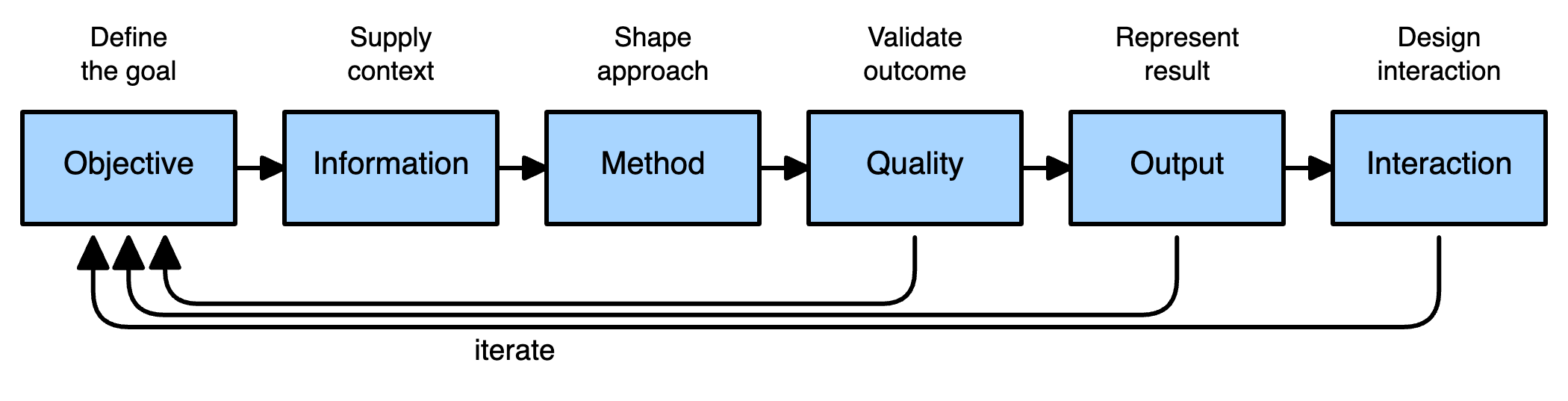
Like SOLID in software design, these principles are not prompt templates. They are higher-level rules that explain what makes prompts reliable and where prompt design goes wrong.
Click any principle to expand and read the problem it addresses and what the principle says.
These are the core principles that guide prompt design. They explain how to create prompts that are explicit, grounded, structured, and reliable, and they provide the foundation for the patterns introduced in the book.
Also available as a book
The site is the free catalog. The book is the teaching material.
Mechanism, 2–4 worked examples per technique, placement rules, debugging sequences, composition recipes — roughly 5× the depth of this site. Pay-what-you-want on Leanpub.