Perspective Framing
Sets the communicative perspective (role, audience, or situation) the model should adopt for interpreting, prioritizing, and expressing information.
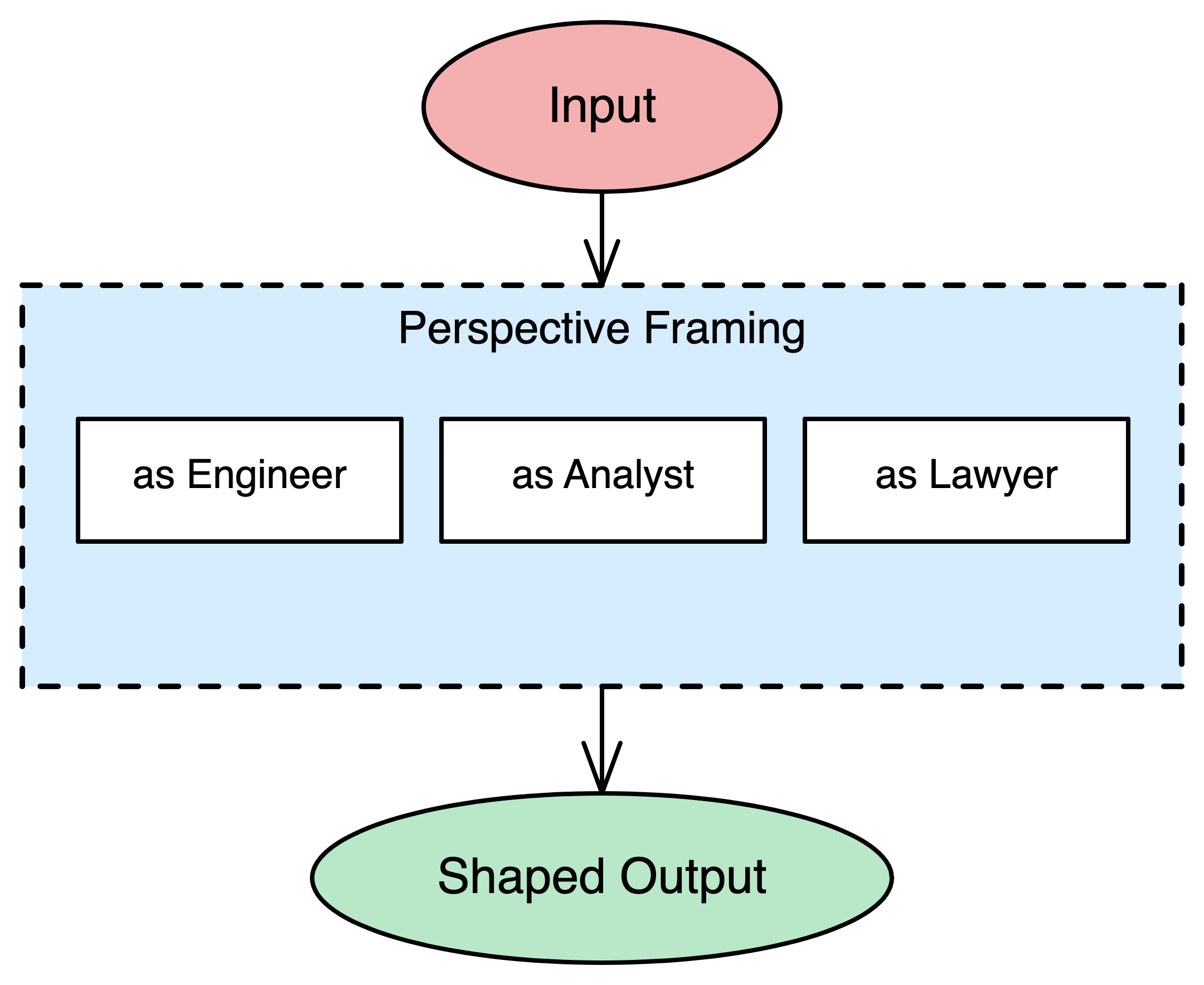
Problem
Without a perspective cue, outputs default to generic framing, weak prioritization, and sometimes unexamined agreement with user bias.
Solution
Declare role, audience, situation, or evaluative lens so the model applies the right learned conventions for emphasis, structure, and judgment. This reduces framing ambiguity without requiring long instruction lists.
Example
One worked example. The book has 2–4 per technique.
You are the security lead at a payroll platform that handles employee tax records and bank account data. Prepare a short review for the platform leadership team. We are entering annual compliance audit season, and any admin lockout would disrupt customer payroll operations. Review this proposed admin access change.
The change would reduce the risk of unauthorized access to payroll and bank account data, but the rollout risk is material because support, incident response, and emergency access paths all depend on the current admin workflow. For platform leadership, the key decision points are whether break-glass access has been tested, whether customer operations could see onboarding or support delays, and whether monitoring is in place for failed login spikes and privilege-escalation attempts during rollout. In this audit window, the trade-off is stronger access control versus higher short-term operational fragility if fallback paths are not validated first.
Techniques
Concrete ways to implement Perspective Framing. Each technique fits a different situation.
- 01
Speaker Role
Specify who the model is speaking as to anchor the response in a familiar professional or social identity with its own conventions.
- 02
Audience Role
Specify who the model is speaking to so vocabulary and depth match the listener's assumed background and expectations.
- 03
Situational Cue
Specify the operating context (time, environment, constraints, stakes) to change what is prioritized and how cautious the response should be.

Full treatment in the book
Perspective Framing — the complete chapter
- ▸ Mechanism — why this pattern works
- ▸ 2–4 worked examples per technique
- ▸ Placement, sequencing, and debugging rules
- ▸ Composition with related patterns