Context Curation
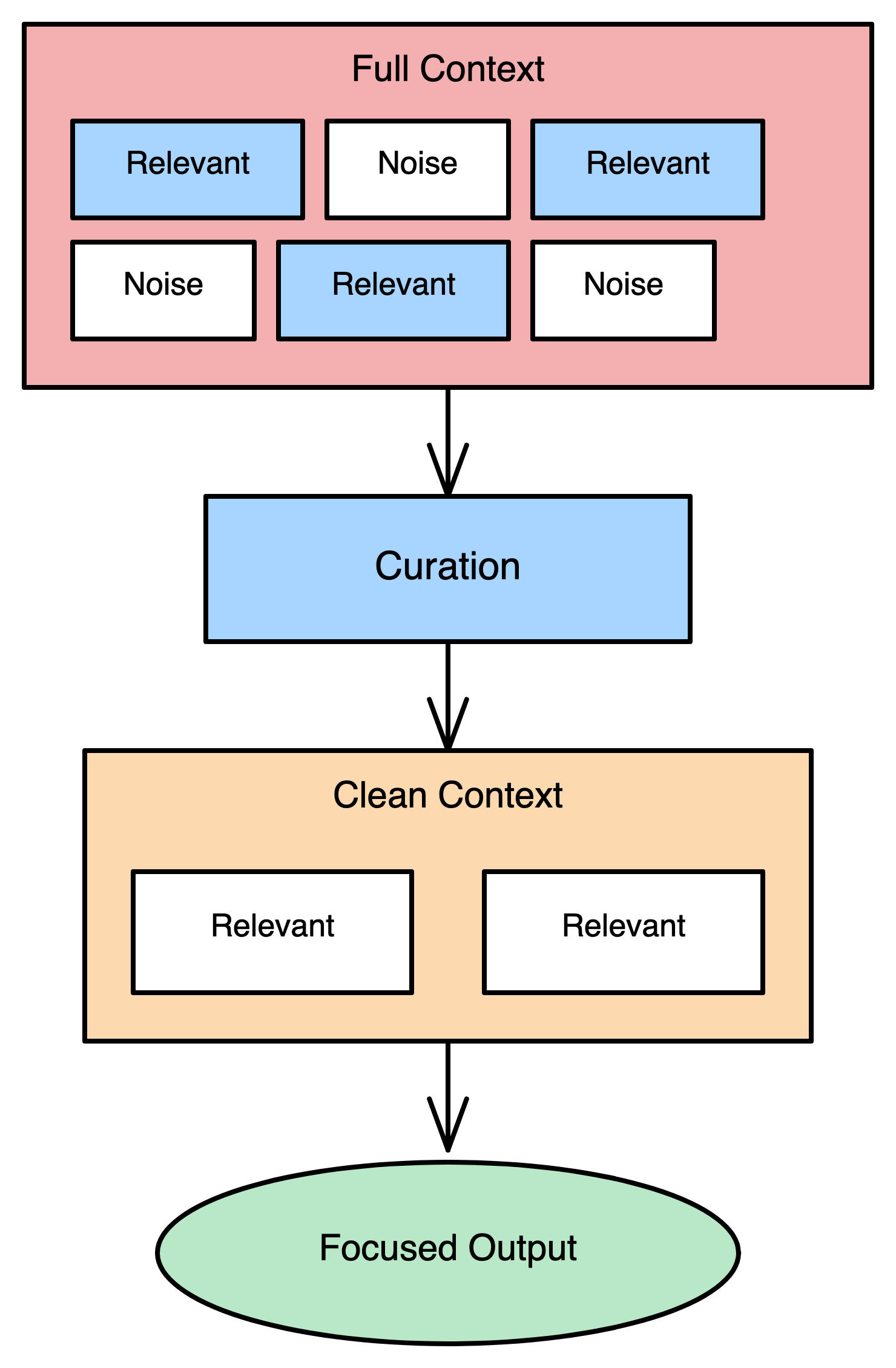
Specifies which provided information counts as relevant evidence and which should be ignored, without adding, removing, or rewriting context.
Problem
Once text is present, irrelevant or biased details can still influence generation and pull reasoning toward plausible distractors.
Solution
Explicitly define what counts as evidence and what must be ignored, or reconstruct a reduced context before answering. This reweights or removes distractors so reasoning tracks task-relevant signals.
Example
One worked example. The book has 2–4 per technique.
Answer the question using only the details that directly explain why inbox setup is blocked.

Support notes:
- BrightPath asked whether annual billing includes weekend coverage.
- BrightPath invited four team members during setup.
- BrightPath's admin said domain verification is still pending, so the shared inbox has not connected.
- BrightPath also asked whether SSO is included on the Pro plan.

Question: Why has BrightPath not completed inbox setup?
BrightPath has not completed inbox setup because domain verification is still pending, so the shared inbox has not connected.
Techniques
Concrete ways to implement Context Curation. Each technique fits a different situation.
- 01
Context Scoping
Use a single-step instruction telling the model what to attend to or ignore so distractors stay present but lose influence.
- 02
Context Reconstruction
Rewrite the input into a minimal, task-relevant version first, then answer only from the rewritten material so distractors are physically removed.

Full treatment in the book
Context Curation — the complete chapter
- ▸ Mechanism — why this pattern works
- ▸ 2–4 worked examples per technique
- ▸ Placement, sequencing, and debugging rules
- ▸ Composition with related patterns